


Climb Cayambe: Ecuador’s Glacial Giant

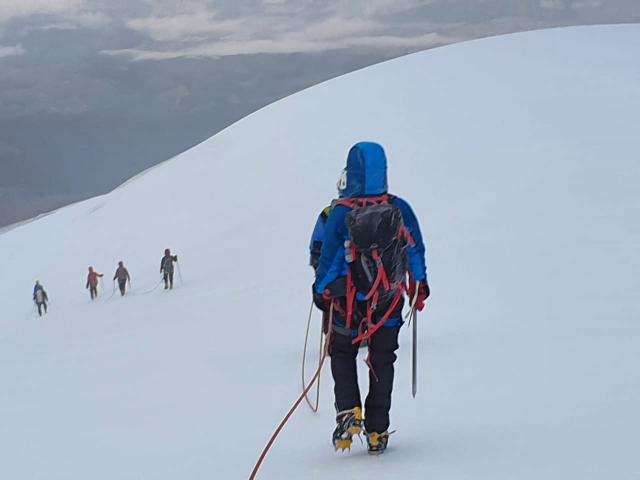
When most climbers think of Ecuador, Cotopaxi and Chimborazo often steal the spotlight. But tucked just northeast of Quito lies Cayambe (5,790 m) — the third highest mountain in Ecuador, and the only major glaciated peak on Earth crossed by the equator. Despite its size and beauty, Cayambe remains one of the most underrated climbs in the Andes. And that’s exactly what makes it so special.
Where Is Cayambe?
Cayambe sits within the Cayambe-Coca Ecological Reserve, about 70 km northeast of Quito. The town of Cayambe itself is known for its dairy products and bizcochos — but beyond the farmland, winding dirt roads lead to the glacier-covered volcano that dominates the horizon. Unlike Cotopaxi, which lies in a broad paramo basin, Cayambe’s northern flanks are more rugged and remote, offering a true wilderness feel.
What Makes Cayambe Unique?
- Glacier at the Equator: Cayambe is the only snow-capped mountain on Earth whose glaciers actually touch the equator line. There’s even a GPS marker near the glacier marking Latitude 0°00’00” — a surreal experience to stand at the “Middle of the World” on ice.
- Less Traffic, More Solitude: While Cotopaxi and Chimborazo see steady climbing traffic, Cayambe offers a quieter, more immersive mountaineering experience. It’s ideal for those seeking solitude and pristine glacier routes.
- Technical Diversity: The climb involves a glacier traverse with crevasses, snow bridges, and sometimes short ice pitches depending on the season. It’s a perfect intermediate climb for those with some mountaineering experience and basic ice skills — or for Cotopaxi veterans looking for the next challenge.
Glacier Conditions & Climbing Season
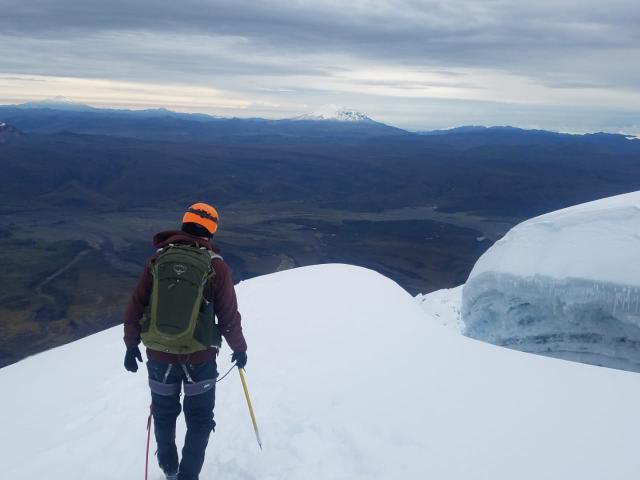
Cayambe’s glacier is in better shape than many others in Ecuador due to its northeastern exposure, meaning it’s less affected by equatorial sun and wind. However, weather can be unpredictable. The best climbing windows tend to be during Ecuador’s dry seasons:
- June to August: Cold, crisp conditions with minimal precipitation. Nights can be windy.
- December to February: Slightly warmer and less windy, but occasional snowfall.
Avoid shoulder seasons like April–May and September–October, when clouds and heavy rain increase avalanche risk and navigation difficulty.
The Cayambe Refuge
The Refugio Ruales Oleas Bergé sits at around 4,600 meters and serves as the base for most ascents. It’s a basic but functional shelter, offering bunk rooms, a kitchen, and a staging point for glacier practice. The refuge can be reached by a sturdy 4×4 vehicle, especially in wet conditions.
Pro tip: Spend at least 1–2 nights at the refuge or in nearby highland lodges for acclimatization and glacier training. Most summit pushes begin around midnight, reaching the top between 6–8 AM.

Recommendations Before You Climb
- Acclimatization is key: Don’t underestimate Cayambe’s elevation. Spend several days trekking or climbing lower peaks like Rucu Pichincha, Pasochoa, or Iliniza Norte beforehand.
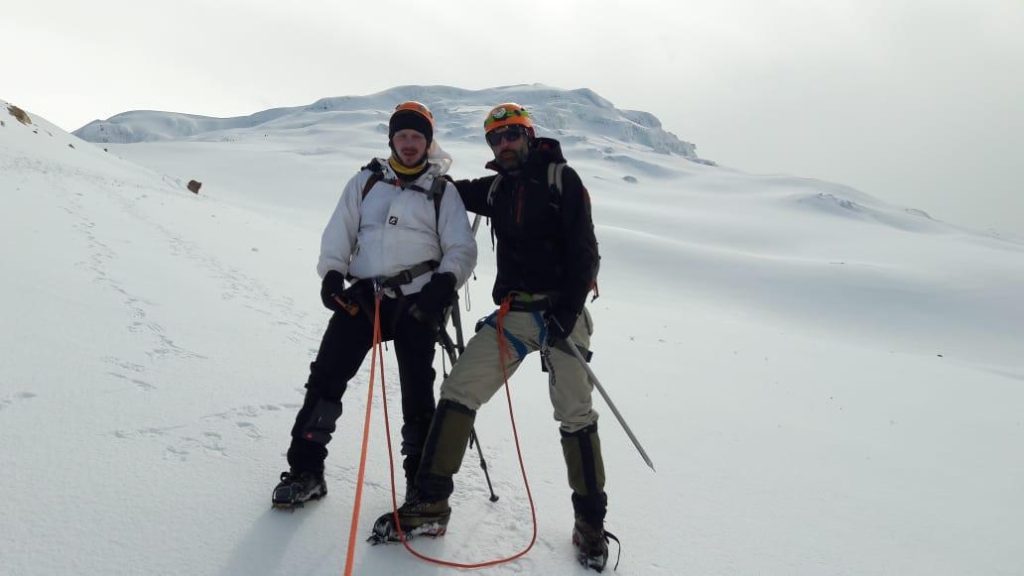
- Bring glacier gear or rent from a certified outfitter: Crampons, harness, helmet, ice axe, mountaineering boots, and a crevasse rescue kit are essential.
- Hire a certified ASEGUIM mountain guide: Weather and route-finding on Cayambe can be tricky. Trust a guide who knows the crevasse systems and safe lines.
- Watch the forecast carefully: Cayambe can hide behind clouds even when Quito is sunny. Always check mountain-specific forecasts (not just general weather apps).
Combine Adventure with Conservation
Cayambe isn’t just about the summit. It’s part of the Cayambe-Coca Reserve, one of Ecuador’s most ecologically diverse protected areas. Pair your climb with visits to Polylepis forests, hot springs, or high-altitude lagoons to fully appreciate the landscape’s richness. You might even spot Andean condors or spectacled bears on your way up.
Cayambe offers a perfect blend of adventure, solitude, and technical challenge. It’s a rewarding peak for those who want more than just a tourist climb — and for mountaineers who are ready to step off the well-worn path and onto the glacier that straddles the equator.
Looking to train for higher peaks? Cayambe is also a fantastic preparation climb for Chimborazo or northern Peru’s glacier giants. And if you’re lucky enough to stand on its summit, you’ll be one of a small number of climbers to say you’ve crossed the equator on crampons.