
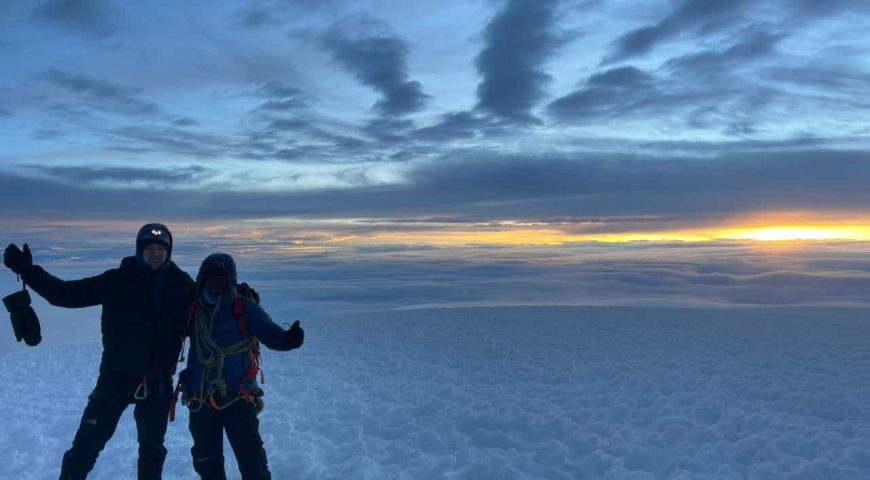
High Camp vs Refuge on Chimborazo: Which Option Gives You the Best Chance to Summit?
One of the most searched questions among climbers planning an expedition to Chimborazo is: Should I climb Chimborazo from the refuge or from high camp?
This question is extremely important because the answer directly affects your acclimatization, energy levels, summit success rates, and overall experience on Ecuador’s highest mountain.
As mountaineering in Ecuador continues growing internationally, more climbers are researching the best strategy for climbing Chimborazo safely and efficiently. Understanding the real difference between the refuge and high camp is essential before booking a climb.
At 6,263 meters, Chimborazo is not simply a trekking peak. It is a serious high-altitude glaciated mountain where preparation, logistics, and acclimatization determine whether you stand on the summit or turn around early.
Why Chimborazo Is Considered One of the Hardest Climbs in Ecuador
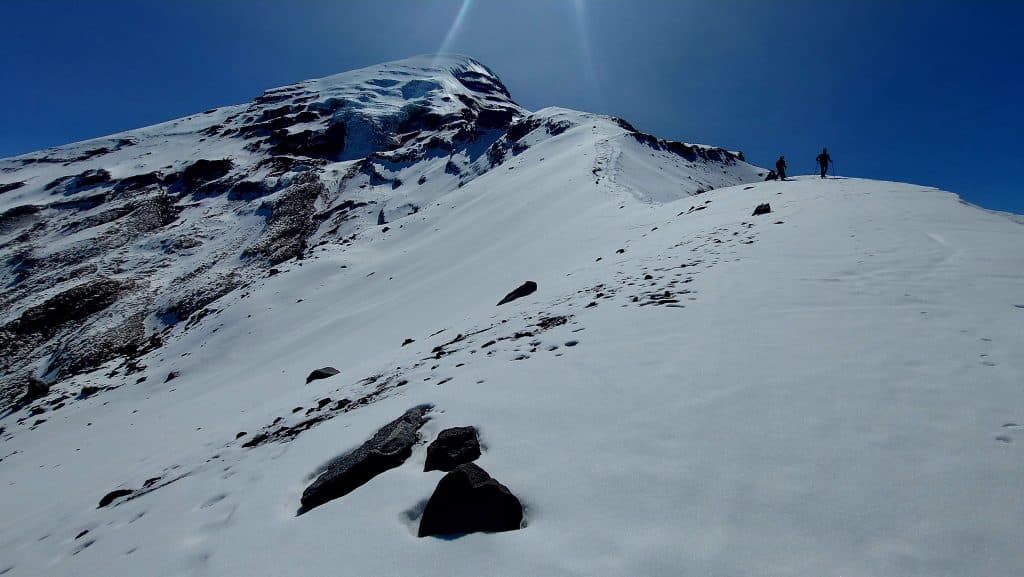
Compared to other volcanoes in Ecuador such as Cotopaxi, Chimborazo presents a much bigger altitude challenge. The lack of oxygen above 6,000 meters affects every climber differently, regardless of fitness level.
This is why Chimborazo is often considered:
- Ecuador’s most demanding commercial climb
- One of the best high-altitude mountaineering objectives in South America
- An ideal preparation mountain for expeditions in Peru, Bolivia, and the Himalayas
Many climbers underestimate Chimborazo because of Ecuador’s road access. However, easy access does not reduce the effects of extreme altitude.
Choosing the correct climbing strategy is therefore critical.
What Is the Refuge Route on Chimborazo?
The classic approach begins from the Carrel Refuge, located at approximately 4,800 meters.
Most climbers arrive in the afternoon, organize equipment, eat dinner early, and rest before beginning the summit push around midnight.
This option remains popular because:
- Access is relatively easy by vehicle
- It works well for shorter itineraries
- It reduces the amount of gear that must be carried higher
- Climbers sleep at a slightly lower altitude before summit night
However, the major disadvantage is the distance and elevation gain during summit day itself.
Starting from the refuge means climbers must ascend roughly 1,400 vertical meters in one continuous effort at extreme altitude. Even strong climbers often struggle with fatigue during the final sections above 5,800 meters.
This is one of the main reasons summit success rates can vary significantly depending on acclimatization.
What Is High Camp on Chimborazo?
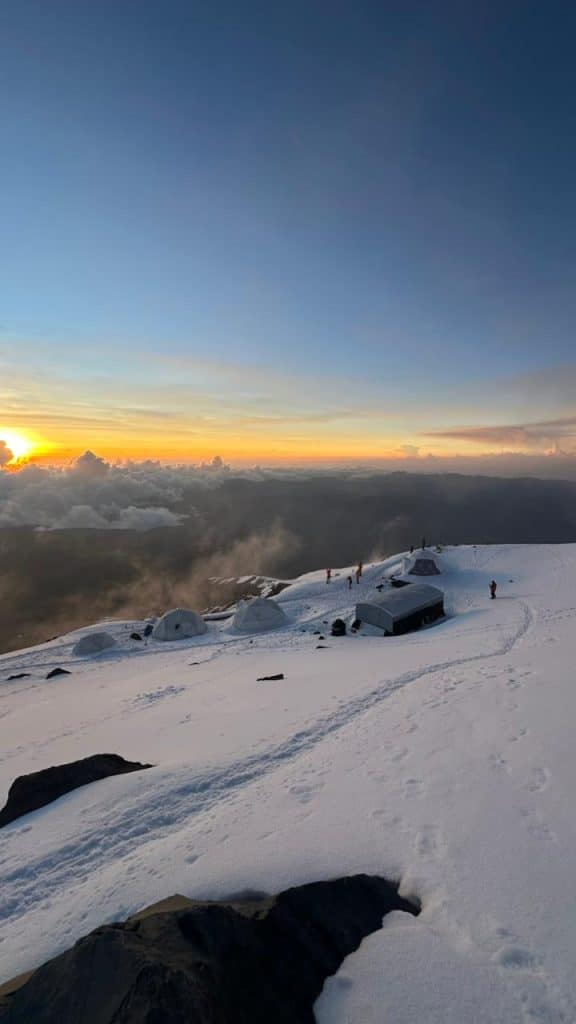
The high camp strategy involves trekking higher on the mountain to approximately 5,300 meters and spending the night there before attempting the summit.
This option places climbers significantly closer to the glacier and summit route.
Although sleeping above 5,000 meters can feel uncomfortable, high camp offers major strategic advantages:
- Shorter summit day
- Less elevation gain during the climb
- Better energy conservation
- Faster access to glacier terrain
- Improved pacing during the final summit push
For experienced mountaineers, high camp is often considered the most efficient way to climb Chimborazo.
The difference becomes especially noticeable during the final hours of the ascent, when fatigue and altitude begin affecting pace and mental focus.
High Camp vs Refuge on Chimborazo: The Real Difference
The true difference between high camp and refuge is not comfort—it is performance at altitude.
Above 5,000 meters, your body burns energy faster while recovering more slowly. Every unnecessary meter climbed during summit night increases exhaustion.
Climbers departing from the refuge spend significantly longer moving uphill in the dark before reaching the glacier. By contrast, teams starting from high camp can conserve strength for the upper mountain.
This often translates into:
- Better summit success probability
- Lower fatigue during descent
- Improved pacing above 6,000 meters
- Reduced exposure time to changing mountain conditions
On difficult summit days, these differences become critical.
Why Acclimatization Is More Important Than Fitness
One of the biggest mistakes climbers make when planning a Chimborazo expedition is focusing only on physical fitness.
Fitness helps, but acclimatization is what truly determines success at high altitude.
A properly structured acclimatization plan in Ecuador usually includes:
- Quito at 2,850 meters
- Rucu Pichincha acclimatization hike
- Iliniza Norte or similar progression climbs
- Cotopaxi before Chimborazo whenever possible
- Recovery days before the summit attempt
Climbers who skip acclimatization frequently experience headaches, exhaustion, poor recovery, or altitude sickness.
This is especially important for climbers choosing the high camp option, since sleeping at 5,300 meters requires the body to already be adapted to altitude.
Chimborazo Basecamp Lodge: A Strategic Advantage for Acclimatization
A major factor in successful Chimborazo expeditions is where climbers recover before summit day.
At Ecuador Eco Adventure, we use Chimborazo Basecamp Lodge as a strategic acclimatization and recovery location before moving higher on the mountain.
Located around 3,900–4,000 meters near the Chimborazo reserve, the lodge allows climbers to progressively adapt to altitude while still sleeping in a more comfortable environment than the refuge or high camp.
This approach offers several important advantages:
- Better recovery before summit day
- Progressive altitude adaptation
- Improved hydration and nutrition
- Reduced physical stress before the climb
- Easier access to acclimatization hikes in the reserve
Many climbers fail on Chimborazo not because they are weak, but because their itinerary is rushed. Spending proper time acclimatizing at Chimborazo Basecamp Lodge creates a much stronger foundation before moving to high camp.
This is one of the reasons our acclimatization programs consistently produce better summit experiences.
Which Option Is Better for Most Climbers?
For climbers with limited acclimatization, shorter itineraries, or previous high-altitude experience, the refuge option can still work well.
However, for climbers aiming to maximize summit chances, reduce fatigue, and improve overall pacing, high camp is generally the superior strategy.
This is especially true for:
- First-time 6,000-meter climbers
- Climbers attempting Chimborazo after Cotopaxi
- Mountaineers preparing for larger expeditions abroad
- Clients seeking the highest possible summit probability
The key factor is always acclimatization. High camp works best when combined with a properly structured acclimatization schedule.
Weather and Glacier Conditions on Chimborazo
Another important factor many blogs fail to mention is that Chimborazo’s glacier conditions constantly change.
Snow conditions, crevasses, avalanche exposure, and route variations depend heavily on weather patterns and recent snowfall. This is why Chimborazo should only be climbed with certified mountain guides familiar with current conditions.
At Ecuador Eco Adventure, our ASEGUIM-certified guides continuously evaluate:
- Glacier safety
- Route conditions
- Weather forecasts
- Snow stability
- Summit timing strategies
Summit decisions are made in real time based on safety, not fixed schedules.
The Best Strategy for Climbing Chimborazo Successfully
For most climbers, the most effective progression is:
Quito → acclimatization hikes → Cotopaxi or Iliniza → Chimborazo Basecamp Lodge → high camp → summit attempt.
This progression allows the body to gradually adapt while conserving energy for summit day itself.
Climbers who approach Chimborazo with patience and proper acclimatization consistently have a safer and more rewarding experience on the mountain.

General Manager and Founder. National guide and wildlife expert, photographer of wildlife, and Ecuador Birdwatcher. Wlady is a proud Ecuadorian who went to highschool in New Zealand and started of Ecuador Eco Adventure after meeting his Aussie mate Jake while studying ecotourism at uni. Ask us about how to climb Cotopaxi and Climbing Chimborazo as well as Trekking in Ecuador and Yasuni Amazon Tours.