
Chimborazo vs Cotopaxi: Which Volcano Should You Climb First?
Choosing between Chimborazo and Cotopaxi is one of the most common questions climbers ask when planning a mountaineering trip to Ecuador. Both are world-class glaciated volcanoes, both offer unforgettable summit experiences, and both can be climbed within the same expedition. The real question is not which one is better, but which one you should climb first based on your experience, acclimatization, and objectives.
Understanding this difference is critical because it directly impacts your safety, success rate, and overall experience in the Andes.
Understanding the Key Difference
At first glance, Cotopaxi stands out as the iconic choice. Its near-perfect conical shape makes it one of the most recognizable volcanoes in the world, and it has become a benchmark climb for high-altitude beginners. Chimborazo, on the other hand, is less visually symmetrical but far more imposing in terms of altitude and physical demand.
Cotopaxi reaches 5,897 meters and is widely considered the best introduction to glaciated mountaineering in Ecuador. Chimborazo rises to 6,263 meters and is significantly more demanding due to its extreme altitude and harsher conditions. It is also known as the closest point on Earth to the sun, which highlights just how high you are climbing.
This difference in altitude is not just a number—it fundamentally changes how your body performs, how fast you recover, and how difficult each step becomes.
Difficulty: What You Actually Experience on the Mountain
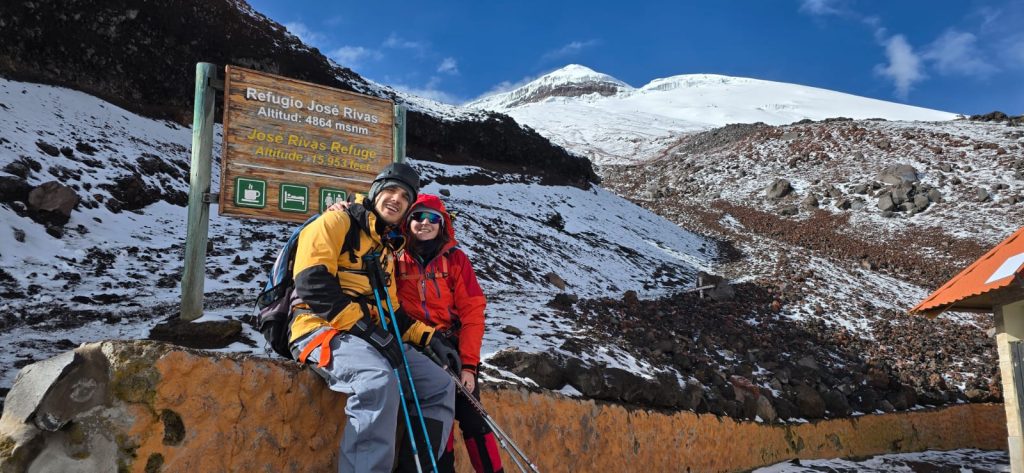
Cotopaxi is often described as a beginner-friendly glaciated climb, but that label can be misleading. While technically more straightforward, it still requires physical endurance, proper gear, and the ability to function at high altitude. Climbers start from the José Rivas Refuge at 4,864 meters, typically around midnight, and follow a steady glacier route to the summit over the course of five to seven hours. The terrain is consistent, and under stable conditions, the route is predictable.
This makes Cotopaxi ideal for climbers who are using crampons and ice axes for the first time or those who want to gain experience on a high-altitude glacier without committing to extreme technical difficulty.
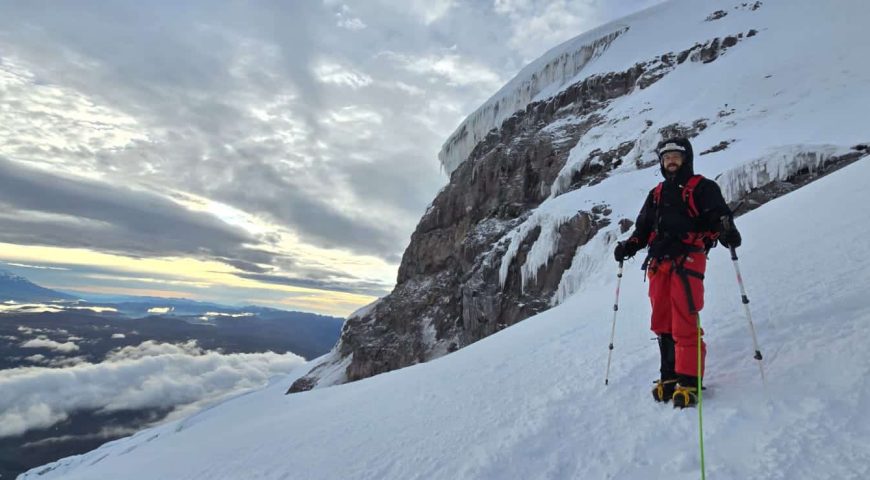
Chimborazo, however, is a completely different challenge. Most summit attempts begin from high camp at approximately 5,300 meters, which is already higher than Cotopaxi’s refuge. From the moment you leave camp, you are operating in significantly thinner air. The climb involves steeper glacier sections, more complex route finding, and longer exposure to cold and fatigue.
The altitude alone makes Chimborazo feel exponentially harder. Movements slow down, breathing becomes more difficult, and even simple tasks require more effort. This is why Chimborazo is considered a true high-altitude expedition rather than just a climb.
Altitude and Acclimatization: The Real Deciding Factor
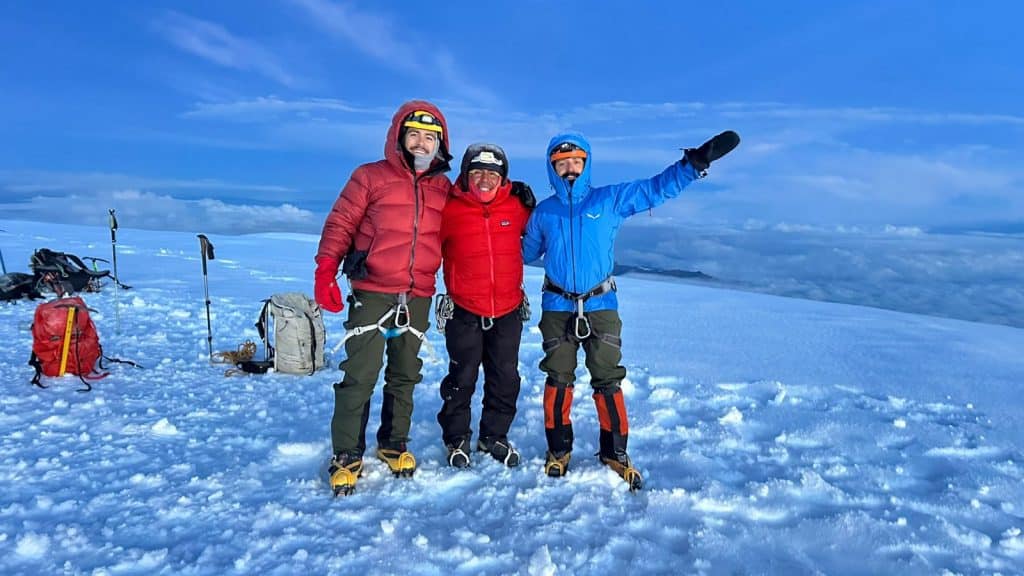
The most important factor in deciding which volcano to climb first is not preference, but acclimatization. Ecuador offers a major advantage compared to other mountaineering destinations because you can access high elevations quickly by road. However, this advantage only works if the acclimatization process is structured correctly.
A well-designed acclimatization strategy typically begins in Quito at around 2,850 meters, followed by progressive hikes and climbs such as Rucu Pichincha and Iliniza Norte before attempting Cotopaxi. Only after successfully adapting to these elevations should climbers move on to Chimborazo.
Skipping this progression significantly reduces your chances of reaching the summit, particularly on Chimborazo where altitude is the main limiting factor. Proper acclimatization is the difference between a successful expedition and turning around early.
Logistics and Accessibility
From a logistical perspective, Cotopaxi is more accessible and easier to organize. Inside Cotopaxi National Park, climbers can drive close to the refuge and reach it with a short hike of approximately 45 minutes. This allows for shorter programs, including 2-day climbs, making it a flexible option for travelers with limited time.
Chimborazo, located within the Chimborazo Wildlife Reserve, is more remote and requires a more extended approach. After driving to around 4,800 meters, climbers must hike to high camp, which typically takes between one and a half to two hours. The environment is harsher, and the climb requires more preparation and logistical coordination.
Success Rates and Reality
Cotopaxi generally offers higher summit success rates, particularly for climbers who follow a proper acclimatization plan. The route is more consistent, and the lower altitude makes it more achievable for a wider range of climbers.
Chimborazo, by contrast, has lower success rates due to its altitude, weather variability, and physical demands. Climbers must be prepared for changing conditions and understand that flexibility is essential. The mountain requires not only physical preparation but also mental resilience.
For this reason, experienced guides consistently recommend climbing Cotopaxi first and using it as a stepping stone toward Chimborazo.
So, Which One Should You Climb First?
If you are new to high-altitude mountaineering or want to build confidence on glacier terrain, Cotopaxi is the logical starting point. It provides the right balance of challenge and accessibility, allowing you to gain experience while still achieving a significant summit.
Chimborazo should be approached after proper acclimatization and ideally after completing another high-altitude climb. Attempting it too early often leads to unnecessary fatigue and reduced chances of success.
The most effective strategy is not to choose between them, but to combine both mountains within a structured program that gradually builds your acclimatization and performance.
Final Recommendation
The most reliable progression for climbers in Ecuador follows a clear sequence: begin with acclimatization hikes such as Rucu Pichincha, move on to Iliniza Norte, then climb Cotopaxi, and finally attempt Chimborazo. This progression is based on years of guiding experience and is designed to maximize both safety and summit success.
Approaching the mountains in this order allows your body to adapt efficiently while giving you the technical and physical preparation needed for higher elevations.
Plan Your Climb in Ecuador
At Ecuador Eco Adventure, we specialize in high-altitude expeditions with ASEGUIM-certified guides, optimized acclimatization programs, and complete logistical support. With over 20 years of experience in the Andes, we design programs that prioritize safety, efficiency, and successful summits.
Whether your goal is Cotopaxi, Chimborazo, or a combination of both, we can build a program that matches your level and maximizes your chances of success.
Explore our expeditions at
https://www.ecuadorecoadventures.com

General Manager and Founder. National guide and wildlife expert, photographer of wildlife, and Ecuador Birdwatcher. Wlady is a proud Ecuadorian who went to highschool in New Zealand and started of Ecuador Eco Adventure after meeting his Aussie mate Jake while studying ecotourism at uni. Ask us about how to climb Cotopaxi and Climbing Chimborazo as well as Trekking in Ecuador and Yasuni Amazon Tours.